AN ACADEMY FILM CHAPTER
What Was a Ninja?
Hidden CaveEarly-modern records · Silver Plum
What Was a Ninja?
“Do not accept the first answer. Follow the trace that produced it.”
The Master entrusts you with a mission. A map, a letter and an unresolved history await your judgment.
READ FULL TRANSCRIPT
The Master entrusts you with a mission. A map, a letter and an unresolved history await your judgment.
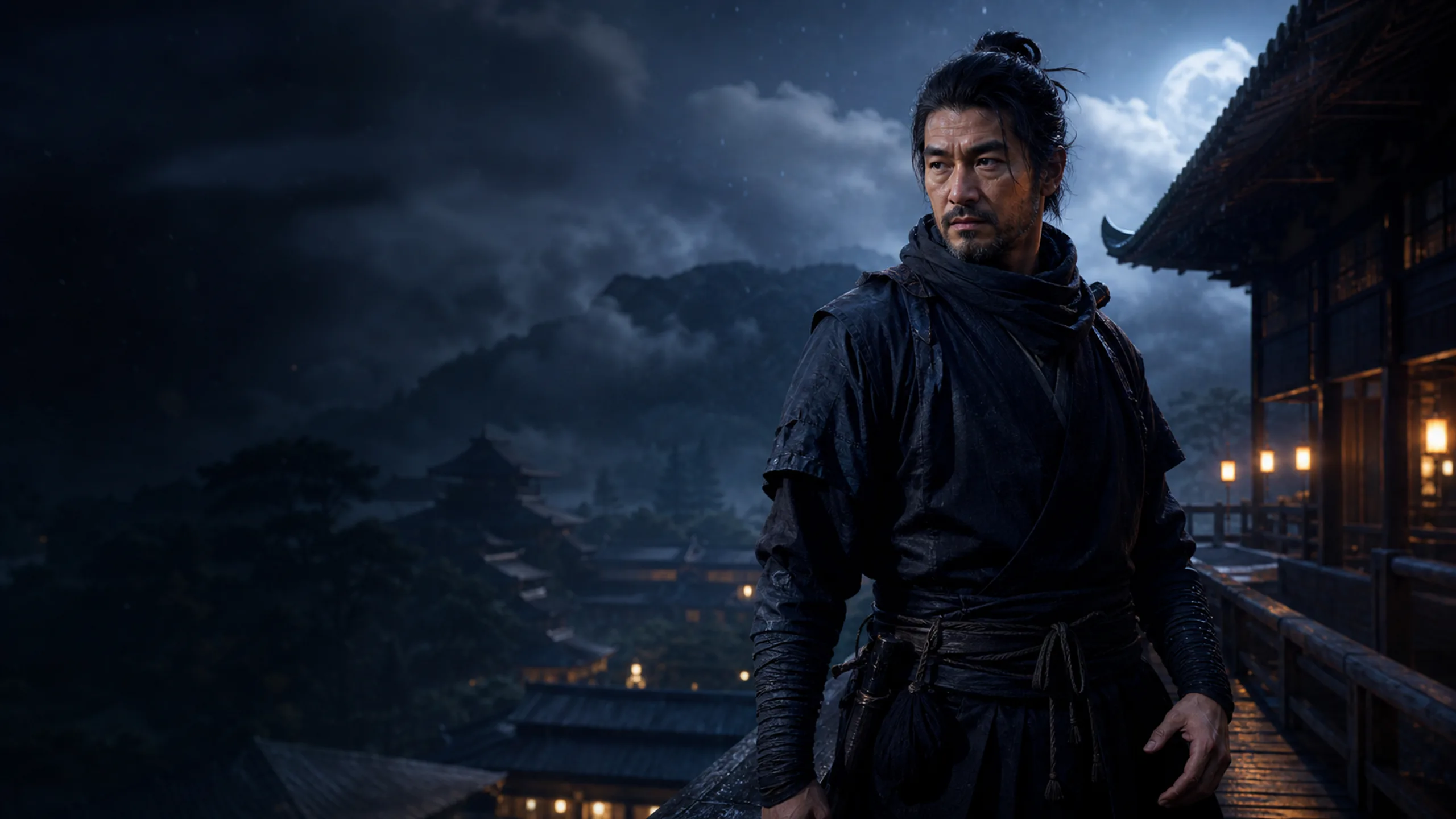
AN ACADEMY FILM CHAPTER
Hidden Cave
What Was a Ninja?
- MOOD
- Silver Plum
- PERIOD
- Early-modern records
- ENVIRONMENT
- Moonlit archive
- ARTIFACT
- Witness Record
YOUR SHINOBI STORY
You have crossed the next Academy gate.
The Master has entrusted you with a clue. Observe the record, judge its reliability, and choose what follows.
- Mission received
- Trace the evidence
- Open the next chapter
DISCOVER THE HIDDEN EVIDENCE
Three pieces of evidence wait in the shadows.
Compare the paper, ink and later annotations.
A map shows routes; it does not prove an event.
Judge the author, date and purpose first.
KNOWLEDGE OBSERVATORY
Make the evidence speak to itself.
Move the focus and observe how a source changes the route and final judgment. Visualization supports understanding; it never replaces verification.
HISTORICAL REENACTMENT
A letter beneath candlelight.
Traceable records support the existence of written intelligence networks; this scene is not footage of a confirmed event.
VIEW RELATED SOURCE AND REVIEW RECORDHISTORICAL MISSION MAP
When the route changes, so does the risk.
Middle period: mountain and intelligence routes between Iga, Kōka and Kyoto.
OPEN ACCESSIBLE TEXT MAP
- Iga — mountain communities and multiple passes
- Kōka — knowledge and local networks
- Kyoto — political, trade and intelligence crossroads
- Nara — temple, road and documentary contexts
ACADEMY KNOWLEDGE DOSSIERS
Collect knowledge—not misconceptions.
PERSON
Hattori Hanzō
hattori hanzōSengoku–Azuchi-MomoyamaThe name can refer to different generations; identify which person a source means.
RELATED SOURCEPROVINCE
Iga
igaMedieval–early modernIga was not one uniform “ninja village,” but a landscape of varied communities.
RELATED SOURCEDOCUMENT
Intelligence Letter
jōhō shokanSource dependentA written claim must be read with authorship, date and preservation context.
RELATED SOURCEMYTH
All-black Uniform
kuro shōzokuLater imageryThe familiar all-black image does not establish an everyday historical uniform.
RELATED SOURCESTRATEGY MOMENT
The intelligence conflicts. What do you protect first?
There is no perfect option. Judge the evidence, risk and uncertainty.
SCHOOL 1 · NINJA FOUNDATIONS · 5–7 MINUTES
What Was a Ninja?
Meet history instructor Hayate Mori. Separate documented roles from later stage imagery, compare sources, and complete ten accessible visual knowledge checks.
1 · TERMINOLOGY
Ninja and shinobi
Shinobi appears in historical language for people engaged in covert activity. Ninja became the internationally familiar modern reading. The words overlap, but context and period matter.
2 · HISTORICAL ROLES
Information before spectacle
Documented activities include gathering information, guiding, observation, communication, disguise, and service within wider military or political networks. “Ninja” was not one universal uniformed profession.
3 · MYTH AND EVIDENCE
The black-costume image
The all-black figure is memorable, but it is strongly associated with theatrical convention and later popular culture. Historical covert work depended on context; ordinary or role-appropriate clothing could avoid attention more effectively.
4 · SOURCE COMPARISON
Ask when, why, and by whom
Closer to the event, but still shaped by the writer’s position and purpose.
Useful for studying cultural memory, but not automatically reliable evidence of the original event.
QUESTION 1 · TERMINOLOGY
Which statement is most accurate?
QUESTION 2 · MYTH VS EVIDENCE
What should we conclude about all-black clothing?
QUESTION 3 · SOURCE RELIABILITY
What is the best first step when comparing two accounts?
QUESTION 4 · HISTORICAL ROLE
Which activity is supported by historical evidence?
QUESTION 5 · TRUE OR FALSE
A near-contemporary record is automatically unbiased.
QUESTION 6 · TIMELINE ORDERING
Which source-checking order is strongest?
QUESTION 7 · MAP AND REGION
What can a historical map help us evaluate?
QUESTION 8 · OBJECT IDENTIFICATION
What does identifying a scroll tell us?
QUESTION 9 · TERMINOLOGY MATCHING
Which label best fits a dramatic modern depiction?
QUESTION 10 · EVIDENCE CASE
A record mentions a guide; a later story calls the guide a supernatural master. What is the strongest conclusion?
INITIATE SEAL PROGRESS
Signed-out sample progress is saved on this device. Sign in to preserve it in your Academy account.
LESSON ARTIFACT
Academy Crest
Complete this lesson to unlock